



 Martin Todorov

 Riccardo Muscarella

 Emma Rossi

 Matteo Moras

 Lucas Schmidt

 Roberto D'Adago

 Roger Jungo
What CO2 Lasers Can and Cannot Do with Metal
What CO2 lasers can do:
- mark stainless steel, aluminium, and titanium using metal marking compounds (e.g. Cermark)
- engrave anodised aluminium surfaces directly without coating
- cut thin non-ferrous sheet up to 1.5 mm on high-power models
- engrave painted or powder-coated metal surfaces
What CO2 lasers cannot do:
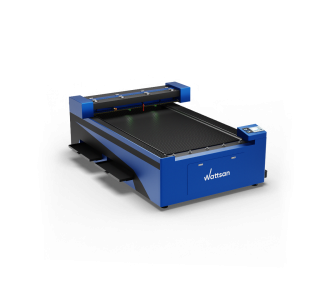
- cut steel plate or structural metal
- mark bare uncoated metal without a chemical compound
For steel cutting, see our metal cutting laser machines. For direct metal engraving without coatings, see our laser marking machines.
How to Choose a CO2 Laser for Metal Work
Selecting the CO2 laser for metal cutting starts with defining your application - surface marking, coated metal engraving, and thin sheet cutting each require a different approach.
- Application first - define whether you need surface marking, coated metal engraving, or cutting. CO2 covers the first two reliably; thin sheet cutting (up to 1.5 mm) is possible only at 130-160W on dedicated models.
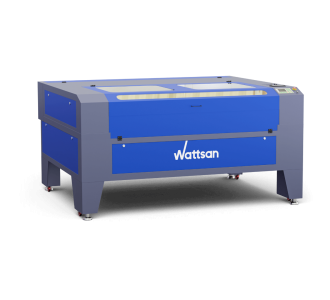
- Thin sheet cutting - machines at 130-160W (1600×1200 mm work area) cut thin non-ferrous metal up to 1.5 mm. This is not a replacement for a dedicated fiber or metal-cutting laser.
- Surface marking - CO2 laser models from 60W mark metal using Cermark or equivalent compounds - producing permanent black marks on stainless steel, aluminium, brass, and titanium.
- Price - CO2 metal marking is the most cost-effective entry point; fiber markers and metal cutting machines carry a higher price.
Why Buy from Virmer
Virmer supplies the full laser range for metal - CO2 for thin sheet work, fiber markers for direct engraving, and CNC laser metal cutters for structural steel. Before you buy, our team will confirm which technology matches your application. All equipment ships from European stock.

