









 Martin Todorov

 Riccardo Muscarella

 Emma Rossi

 Matteo Moras

 Lucas Schmidt

 Roberto D'Adago

 Roger Jungo
What You Can Make from Plywood with a CO2 Laser
Plywood is the most frequently processed sheet material on CO2 lasers. Standard production focuses on birch and poplar grades in 3 and 6 mm thicknesses - and here, an 80W laser tube is the sweet spot, delivering clean, reliable cuts at optimal speed and efficiency.
Typical products include:
- Jigsaw puzzles and educational toys
- Packaging boxes, gift boxes, and product inserts
- Architectural scale models and exhibition props
- Display stands, shelving components, and retail fixtures
- Decorative panels, wall art, and interior elements
- Personalized signs and engraved nameplates
Cut edges are clean and slightly charred - a characteristic finish that requires no additional sealing for most decorative applications.
How to Choose a CO2 Laser Cutter for Plywood
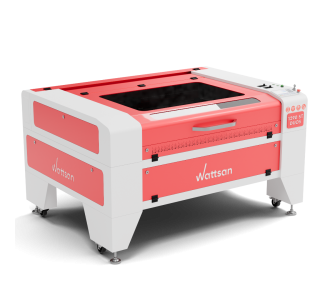
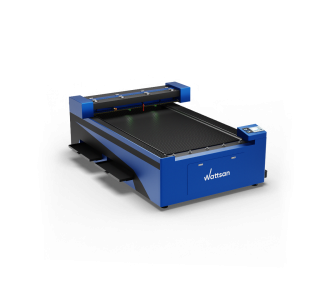
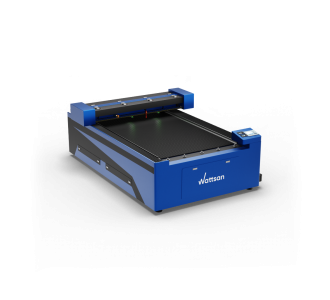
Choosing the right CNC plywood laser cutting machine depends on sheet thickness, core grade, and production volume.
- Laser power - 40-60W is ideal for engraving and cutting plywood up to 6-8 mm; 80W is the standard for clean cutting of birch and poplar up to 10-12 mm; 100-120W is needed only for dense hardwood species over 15 mm (rarely required).
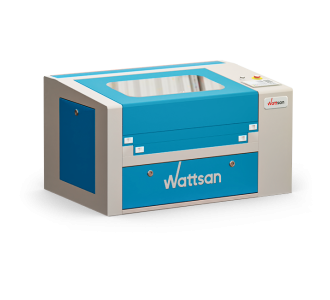
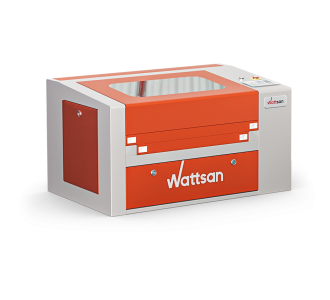
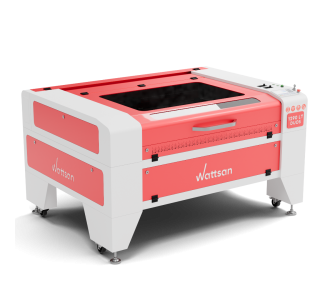
- Work area - 500×300 mm suits prototyping; 900×600 mm is optimal for most plywood production; 1200×900 mm and larger for full-scale sheet cutting without repositioning.
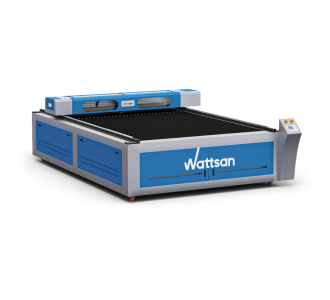
- Pass-through table - an open-ended configuration removes length limitations, allowing work with long strips and blanks without reloading.
- Lifting table - adjustable table height is critical when processing plywood of varying thickness (3, 6, 9 mm), eliminating the need for refocusing between cuts.
- Table type - honeycomb is standard for flat sheet cutting; lamellae work better for rare cases with thicker plywood where airflow is critical. For most production, honeycomb is sufficient.
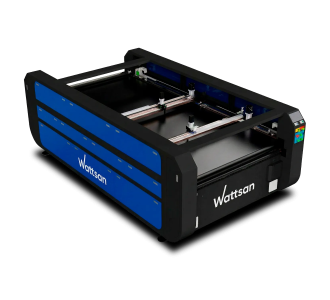
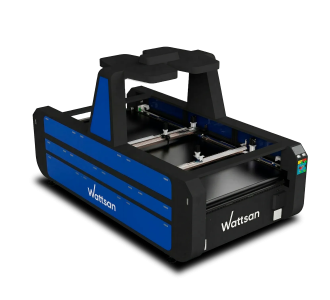
- Enclosed motion module - protection from sawdust and debris is essential for durability during intensive wood processing. Sealed construction significantly reduces belt and bearing wear.
- Fire safety - built-in smoke sensors and audible alarms are mandatory when processing wood. Sawdust and resin have low ignition temperatures - this is not optional, it's a necessity.
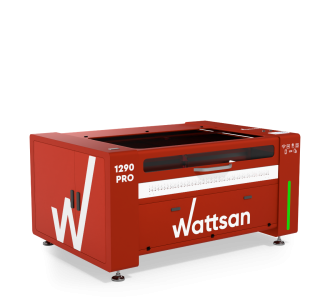
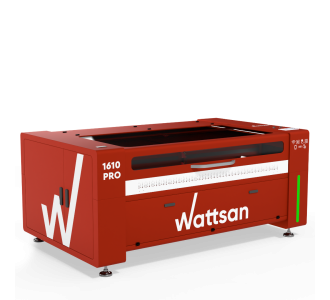
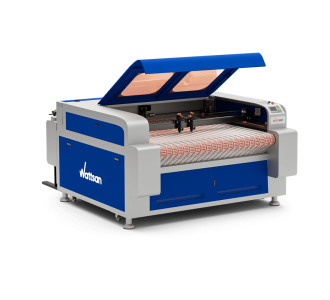
- Number of heads and gantries - dual-head models (Wattsan 1290 Duos, 1610 Duos) double output for mass production of identical parts; dual-gantry systems are essential for high-volume serial production.
- Central alignment of the motor along the Y-axis - prevents asymmetry and elliptical cuts, critical for accurate plywood sizing.
- Cooling system - CO2 lasers require cooling to protect against overheating and failure. A standard water pump works, but for reliable operation, especially during 8+ hour shifts, we recommend a chiller.
- Waste collection chamber - improves working conditions and increases exhaust efficiency. During intensive production, it nearly doubles operator comfort.
- Rotary attachment - an optional add-on for engraving cylindrical items (rolling pins, wooden cups, handles). Not required for standard plywood cutting, but worth confirming availability if you plan to expand production later.
Why Buy from Virmer
Virmer is the official Wattsan distributor in Europe, with machines in stock and ready for dispatch - no customs delays for European buyers. Before purchasing, you can request a test cut on your specific plywood grade to check edge quality and resin behaviour on your material. The full range of CO2 laser cutters and engravers covers every production scale, from desktop units for small-format cuts to CO2 large-format models for full-sheet serial runs. Every machine comes with technical support, post-sale service, and a free online demo available on request.

