









 Martin Todorov

 Riccardo Muscarella

 Emma Rossi

 Matteo Moras

 Lucas Schmidt

 Roberto D'Adago

 Roger Jungo
What You Can Make from Rubber with a CO2 Laser
CO2 lasers are used across two distinct rubber applications - stamp production and industrial rubber processing:
Stamp and print production:
- rubber stamps for office, craft, and commercial use
- polymer and photopolymer plate engraving for flexographic printing
- self-inking stamp inserts and custom seal dies
Industrial and technical applications:
- gaskets and sealing elements cut from rubber sheet
- silicone keyboard overlays and membrane engraving
- anti-slip pads and protective rubber components
Stamp rubber produces the sharpest results on CO2 lasers - clean walls, precise detail, and consistent depth across the engraved area.
How to Choose a CO2 Laser Engraver for Rubber
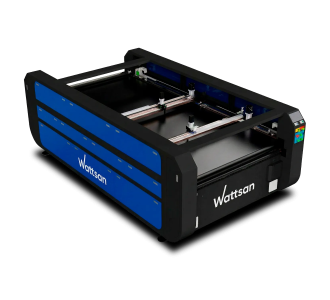
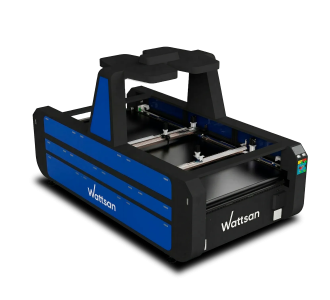
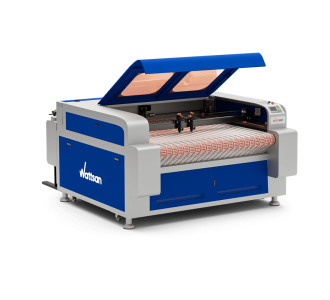
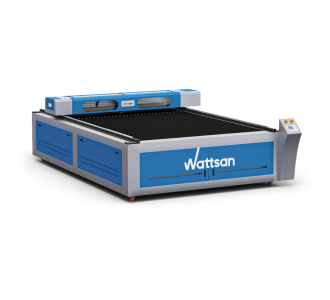
The right rubber stamp laser engraver depends on stamp format, detail resolution, and whether you also need to cut rubber sheet for gaskets or seals.
- Laser power - 40W is sufficient for stamp rubber and polymer plate engraving; 60-80W handles thicker rubber sheet (3-6 mm) for gaskets and industrial components.
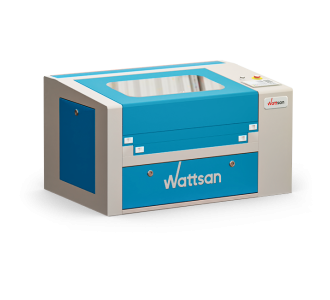
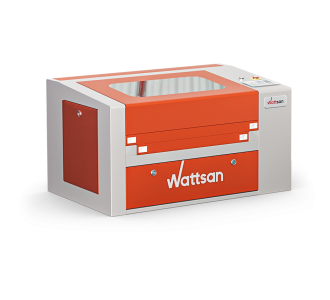
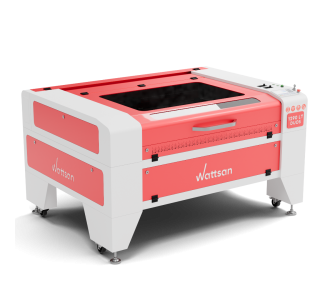
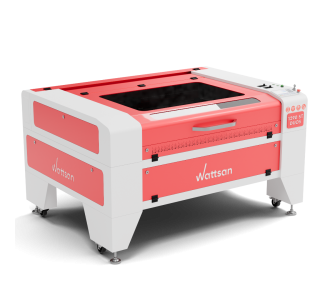
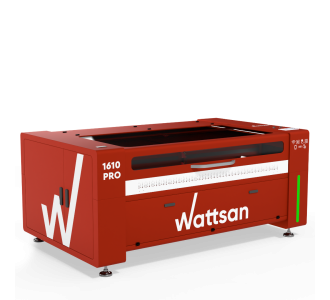
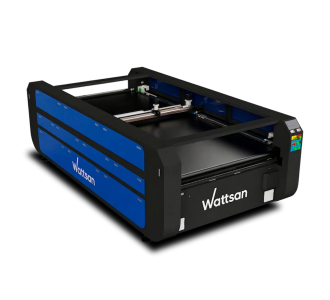
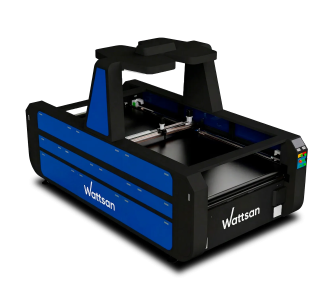
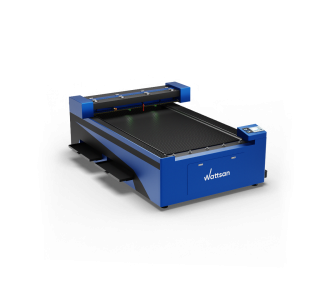
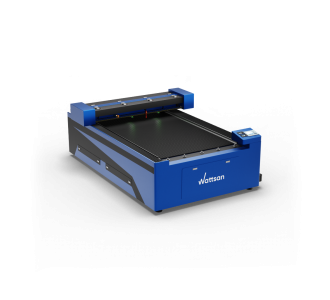
- Work area - the Wattsan 0503 (500×300 mm) covers standard stamp formats and small rubber sheets; larger gasket and seal production requires the Wattsan 6040 (600×400 mm) or 6090 LT (900×600 mm).
- Material type - stamp rubber, polymer, and natural rubber engrave predictably. Silicone requires test engraving before committing to production - results vary by silicone grade and filler composition.
- Ventilation - rubber processing produces sharp fumes. A dedicated extraction system is mandatory regardless of production volume.
Why Buy from Virmer
Virmer is the official Wattsan distributor in Europe, with machines in stock and ready for dispatch - no customs delays for European buyers. Rubber and silicone results depend heavily on material composition - book a free demo or send us a sample before ordering to confirm engraving depth and edge quality on your specific material. The full range of CO2 laser cutters and engravers is available with full post-sale technical support.

